
Frequently Asked Questions
-
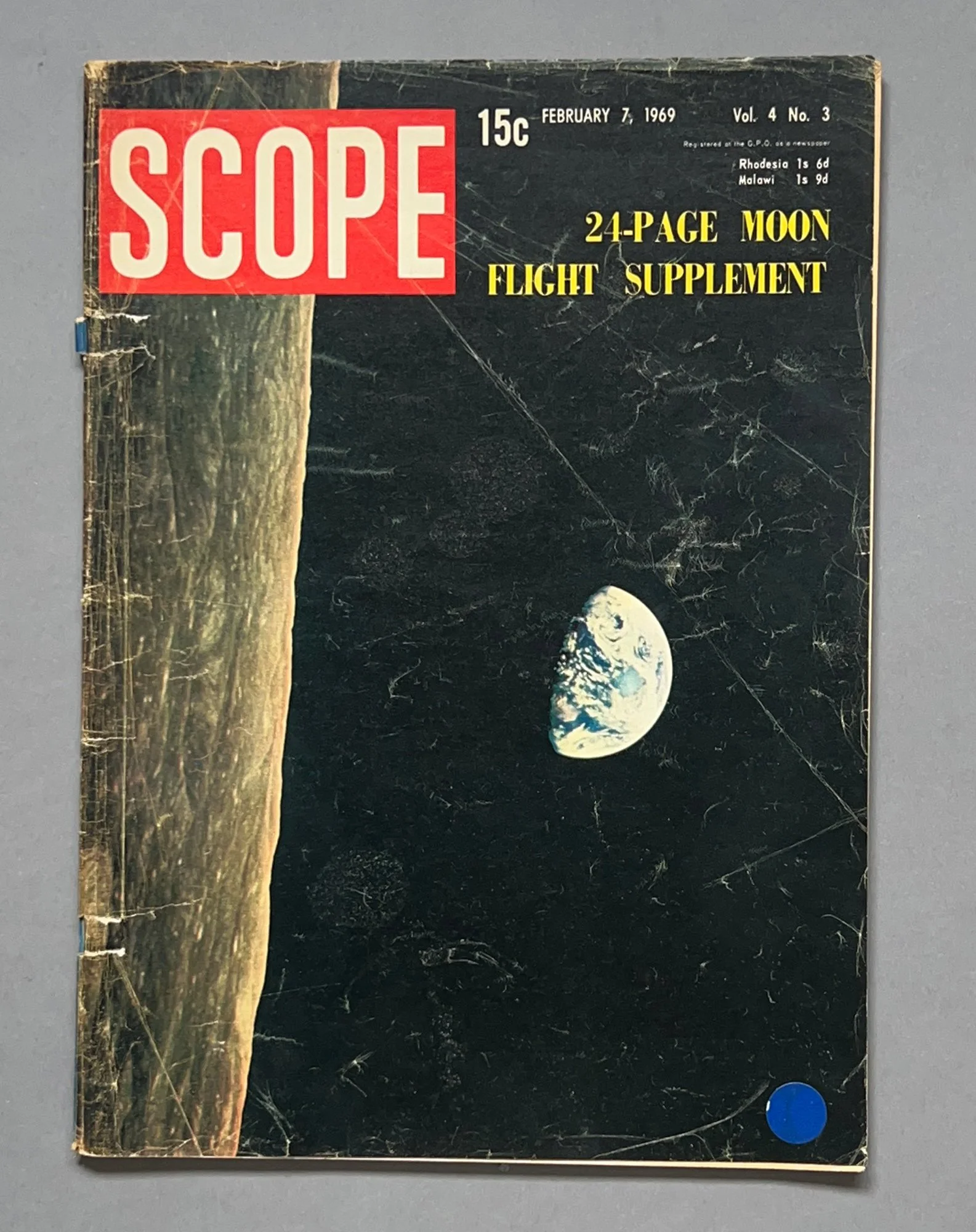
Scope was a widely read South African magazine whose physical copies are increasingly rare, fragile, and inaccessible. Digitising the archive preserves material that would otherwise continue to degrade, and makes it available for historical, cultural, and critical study. Once lost, this material cannot be recovered — digitisation is a form of cultural preservation, not revival.
-
No. The archive is presented as a historical record, not a statement of present-day values. Scope’s content reflects attitudes — including sexism, exclusion, and racial assumptions — that are uncomfortable or flat out unacceptable today. Preserving the material does not mean endorsing it. In fact, critical access is often the most honest way to confront the past.
-
Magazines are primary historical sources. They capture everyday attitudes, aspirations, contradictions, and blind spots in ways official records do not. Scope reflects how a particular segment of society saw itself — and how it wanted to be seen — across several decades of profound political and social change.
-
History is not neutral, and neither are its sources. Scope represents a single point of view, shaped by the social engineering of the time and its audience. That limitation is precisely what gives it value. As a primary source, it helps researchers, students, and readers understand not just what happened, but how it was framed, ignored, or normalised.
-
The magazine underwent a significant transformation. Early issues followed a Life Magazine- style general interest format, with editorial and advertising often aimed at female readers. Over time, it had a few identity crises, shifting toward a racier, male-targeted publication. That evolution reflects broader commercial, cultural, and political shifts, and is one of the most revealing aspects of the archive.
-
This project is intended for all readers. Researchers, students, designers, historians, journalists, and curious readers interested in South African media history, popular culture, and social change. We believe it is a resource for looking closely — and critically — at the past.
-
Digitising a print archive is time-consuming and costly. It involves high-resolution scanning, colour correction, restoration, metadata creation, and secure digital storage. Web hosting and curation.
Support helps ensure the work is done carefully, responsibly, and openly . We’d like the material to be part of the permanent digital record, publicly accessible, rather than disappearing into private collections. -
Advertising is cultural evidence. The ads reveal who the brand owners imagined its readers to be, what roles were reinforced or challenged, and how aspiration, and consumer identity were constructed. In many cases, the advertising is as historically significant as the editorial content.