
THE TIE AND THE MIGHTY.
by HERTZOG BIERMANN
SCOPE TAKES A LOOK AT WHAT SOUTH AFRICA'S TOP PERSONALITIES WEAR ROUND THEIR NECKS AND WHY
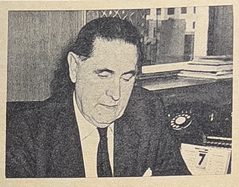
Harry F. Oppenheimer, Prime Minister BJ Vorster and Sir John Nicholls (British Ambassador) rub shoulders in this look at South Africa’s movers and shakers.
“if there is one man whose extremely conservative taste in ties does not match his public image it is the world’s top mining mogul. Mr Harry F. Oppenheimer.
WHAT can a necktie tell you about a man's personality? Not much, some people say, others swear that a person's character. But it is be resolved because there are as many styles and patterns of neckties on the market. The ties worn by rich and industrial men do not differ noticeably from those worn by poor an unimportant men. Office boys often wear ties that cost more than those worn by their bosses. Great public figures might betray the most atrocious taste in the choice of their neckwear – a complete nonentity might be the centre of attraction solely because of the tie round his neck.
A tie is an essentially useless piece of male apparel. All it really does is to fill the empty space below a man's Adam's Apple. It also serves in an emergency to cover the conspicuous place where a button has popped off a shirt- front, and there was a time when club and old-school ties were used by sporting types to hold up their pants.
Until about 50 years ago the necktie separated those who earned their living with their heads from those who earned their living with their hands. In South Africa the necktie has an even longer pedigree. All the way from Blood River onwards, no leader of fighting men would dream of going into battle without wearing a collar and tie. General Andries Pretorius set the style in 1838 and General Piet Joubert confronted the British at Majuba in 1881 wearing a bowler hat, frock coat, boiled shirt and black tie, complete with crossed bandoliers.
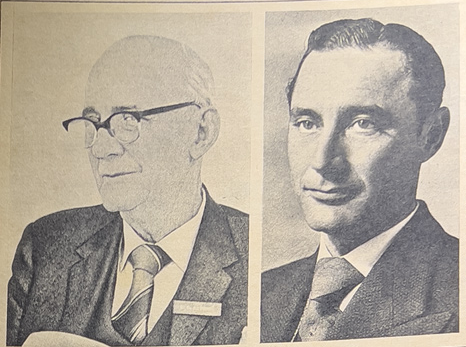
Today's leaders are not so flamboyant, but nevertheless show definite preference in their choice of neckwear. There are no set rules for what the well-dressed political, industrial, academic, scientific or any other kind of public figure should wear around his neck, but if there is one man whose extremely conservative taste in ties does not match his public image it is the world’s top mining mogul. Mr Harry F. Oppenheimer. It can be safely assumed that his ties are expensive, but there is nothing about them to give this impression. And for a man whose wealth lies in gold and diamonds, his ties are noticeably unadorned by gold clasps or diamond stickpins (as the picture above, taken some years ago shows). This is not because these adornments are in bad taste but because Mr. Oppenheimer is not the kind of man who feels the urge to display the contents of his coffers on his person.
“No one remembers what kind of tie Mr. Anton Rupert wore when he was a school master but since he became the world’s top tobacco tycoon, as well as South Africa’s most distinguished patron of the arts, Mr Rupert has gone after neckties with the enthusiasm of a butterfly catcher”.
Some of his genius for packaging his products has gone into a study of the necktie as a work of art. He is very particular about design and is not afraid of colour - in the right combination and blends. He usually buys his ties in Italy from world-renowned cravateurs like Ibbas, Runci, Angelo and Brioni, but his favourite tie artist is said to be Emilie Pucci. And there is also the “Rupert tie”, characterised as “conservative but distinctive.” People who get “Rupert ties” as presents include eminent artists, writers and jurists and, of course, employees, in all his far flung enterprises. before he took off for his Christmas sojourn at Hermanus, Mr. Rupert made the rounds of his Headquarters at Stellenbosch with a box of ties from which his associates were invited to take their pick
For rugged individualism in the field of eye-catching neckwear, no public figure in South Africa has ever matched Mr. Jim Fouché, the Minister of Agricultural Technical Services and Water Affairs
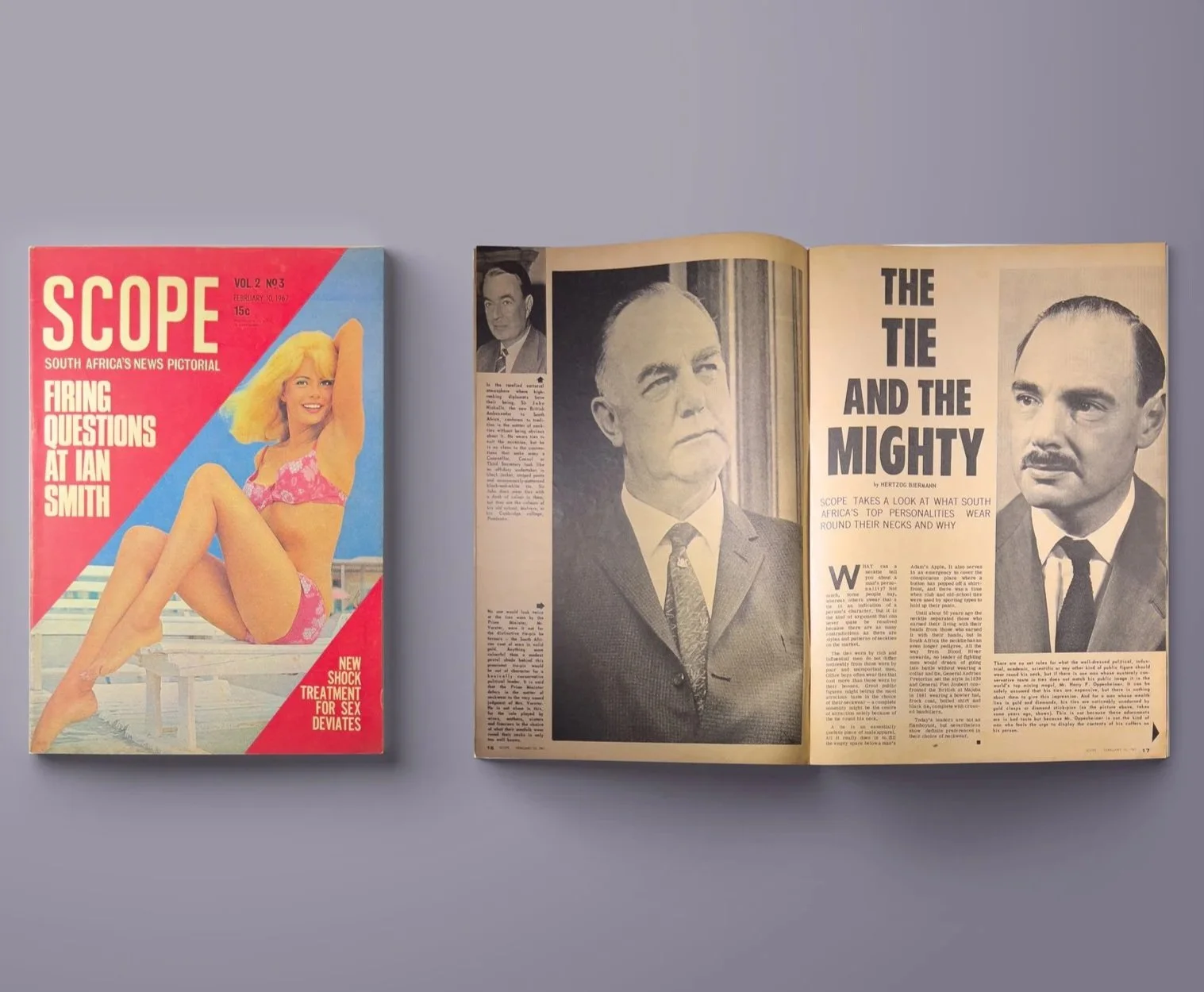
Minister Jim Fouche and son Buks Fouche
For rugged individualism in the field of eye-catching neckwear, no public figure in South Africa has ever matched Mr. Jim Fouché, the Minister of Agricultural Technical Services and Water Affairs (far left). The fist-sized knot in his ties is probably unique and has been the subject of comment wherever "Oom Jim" has appeared in public or has had his photograph published. Only a man who has confidence in his position in society and public affairs would ignore convention the way he has done with the way-out knot that covers so much of his shirt-front. With this exception, Mr. Fouché is conservative in his dress and qualifies as one of the better-dressed members of the Government. The Minister's son, Mr. "Buks" Fouché, until recently South Africa's Ambassador to the Netherlands, shows that in the style of his neckwear "the apple does not fall far from the tree," as they say in the Free State.
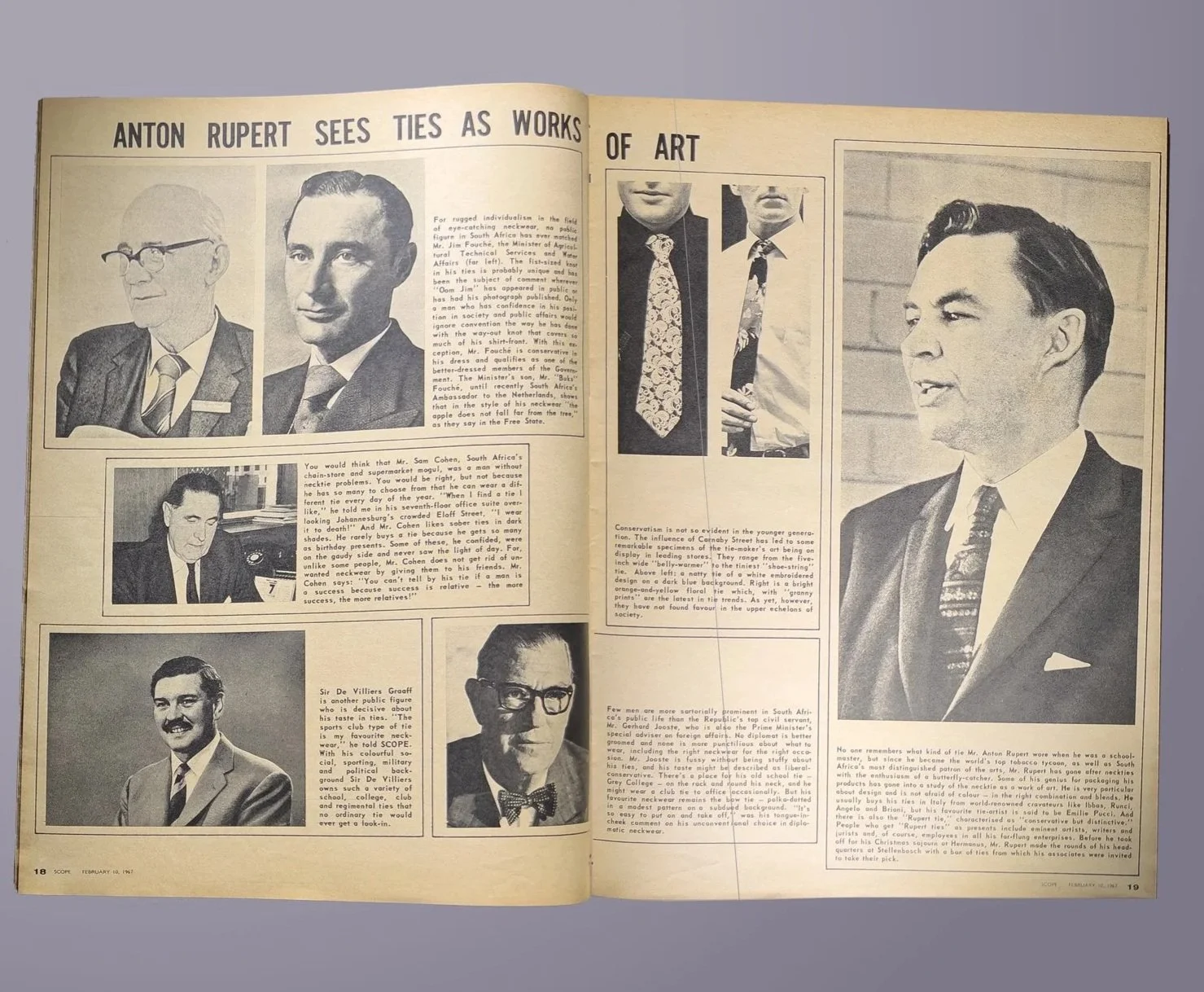
Supermarket Mogul Sam Cohen
You would think that Mr. Sam Cohen, South Africa's chain-store and supermarket mogul, was a man without necktie problems. You would be right, but not because he has so many to choose from that he can wear a different tie every day of the year. "When I find a tie l like." he told me in his seventh-floor office suite overlooking Johannesburg's crowded Eloff Street, "I wear it to death!" And Mr. Cohen likes sober ties in dark shades. He rarely buys a tie because he gets so many as birthday presents. Some of these, he confided, were on the gaudy side and never saw the light of day. For, unlike some people, Mr. Cohen does not get rid of unwanted neckwear by giving them to his friends. Mr. Cohen says: "You can't tell by his tie if a man is a success because success is relative the more success, the more relatives!"
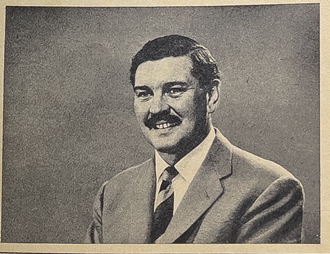
Sir De Villiers Graaff
Sir De Villiers Graaff is another public figure who is decisive about his taste in ties. "The sports club type of tie is my favourite neck-wear," he told SCOPE. With his colourful social, sporting, military and political background Sir De Villiers owns such a variety of school, college, club and regimental ties that no ordinary tie would ever get a look-in.
Conservatism is not so evident in the younger generation. The influence of Carnaby Street has led to some remarkable specimens of the tie-maker's art being on display in leading stores. They range from the five-inch wide "belly-warmer" to the tiniest "shoe-string" tie. Above left: a notty tie of a white embroidered design on a dark blue background. Right is a bright orange-and-yellow floral tie which, with "granny prints" are the latest in tie trends. As yet, however, they have not found favour in the upper echelons of society.